Optimized Traffic Signal Control Using Automated Data Collection: An Industry 4.0 Approach to Urban Mobility
DOI:
https://doi.org/10.60787/gjmsti.vol1no1.47Keywords:
Intelligent transportation,, adaptive signals,, Industry 4.0, urban mobility,, traffic simulation, sensor technologyAbstract
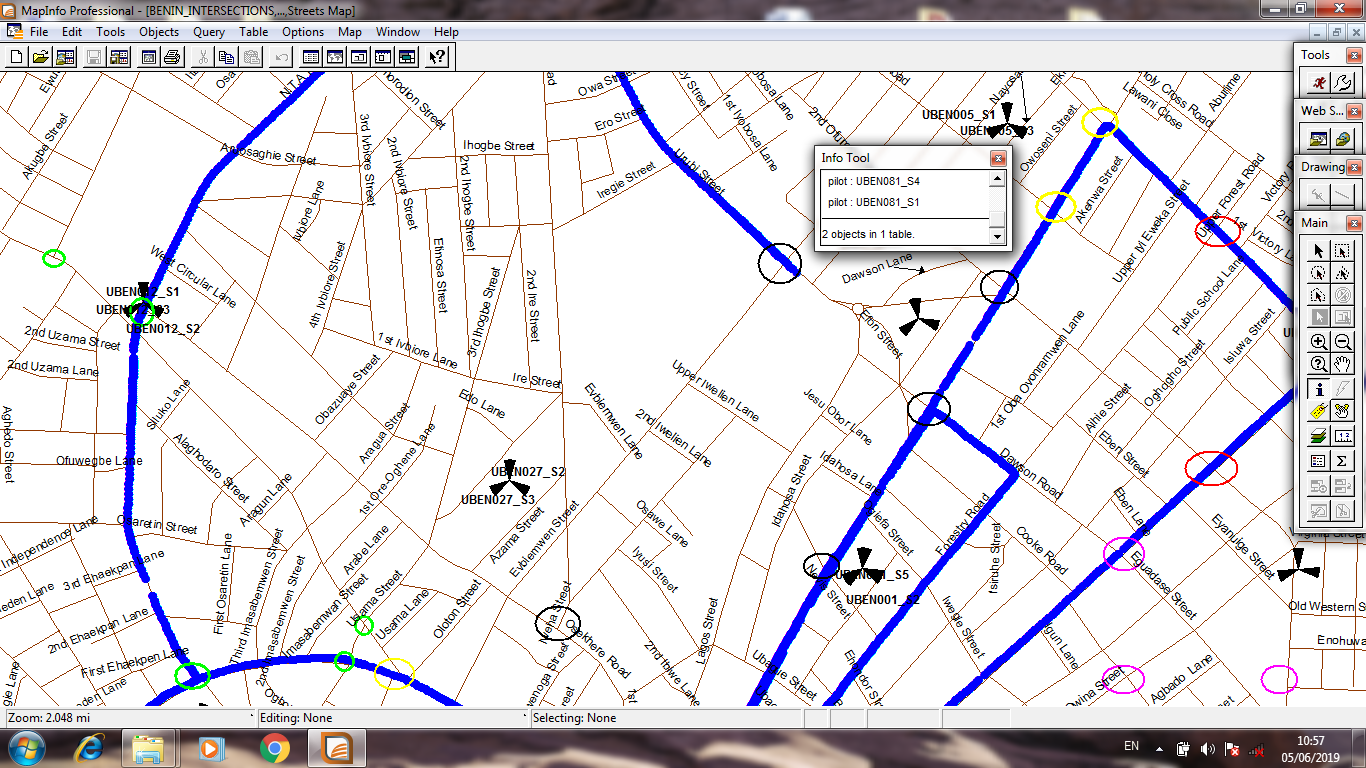
This study aimed to enhance urban traffic management in Benin City, Nigeria, by designing an automated traffic data collection system to support an optimized traffic light control framework, aligning with Industry 4.0’s focus on industrial process automation for national development. Targeting selected intersections in Oredo, the methodology integrated field surveys, sensor-based data collection (pneumatic tubes, MetroCount ATR/VCS, inductive loops, and cameras), and microscopic traffic simulation using the Simulation of Urban Mobility (SUMO) tool. Real-time traffic parameters, including queue length (1–49 vehicles), number of stops (20–39), and delay (10.34–39.99 seconds), were collected and analysed to inform adaptive signal timings. Results demonstrated a 25% reduction in average delay and a 20% decrease in queue length compared to traditional fixed-time controls, with SUMO simulations achieving 95% correlation with field data. The system improved traffic flow, reduced vehicle idling, and supported economic productivity by minimising commuter time losses, estimated at N4 trillion annually in similar Nigerian contexts. Environmentally, lower emissions contributed to sustainable urban development. The study concludes that automated traffic data collection, leveraging sensors and simulation, exemplifies Industry 4.0’s role in advancing smart infrastructure, offering scalable solutions for urban mobility challenges. Future research should integrate machine learning to enhance real-time traffic predictions, fostering smart city initiatives and evidence-based transportation policymaking.