Ethical, Organisational, and Managerial Challenges in Deploying AI in Engineering Firms
DOI:
https://doi.org/10.60787/gjmsti.vol1no1.42Keywords:
Artificial Intelligence,, Engineering Management,, Ethical Challenges,, Organisational Change.Abstract
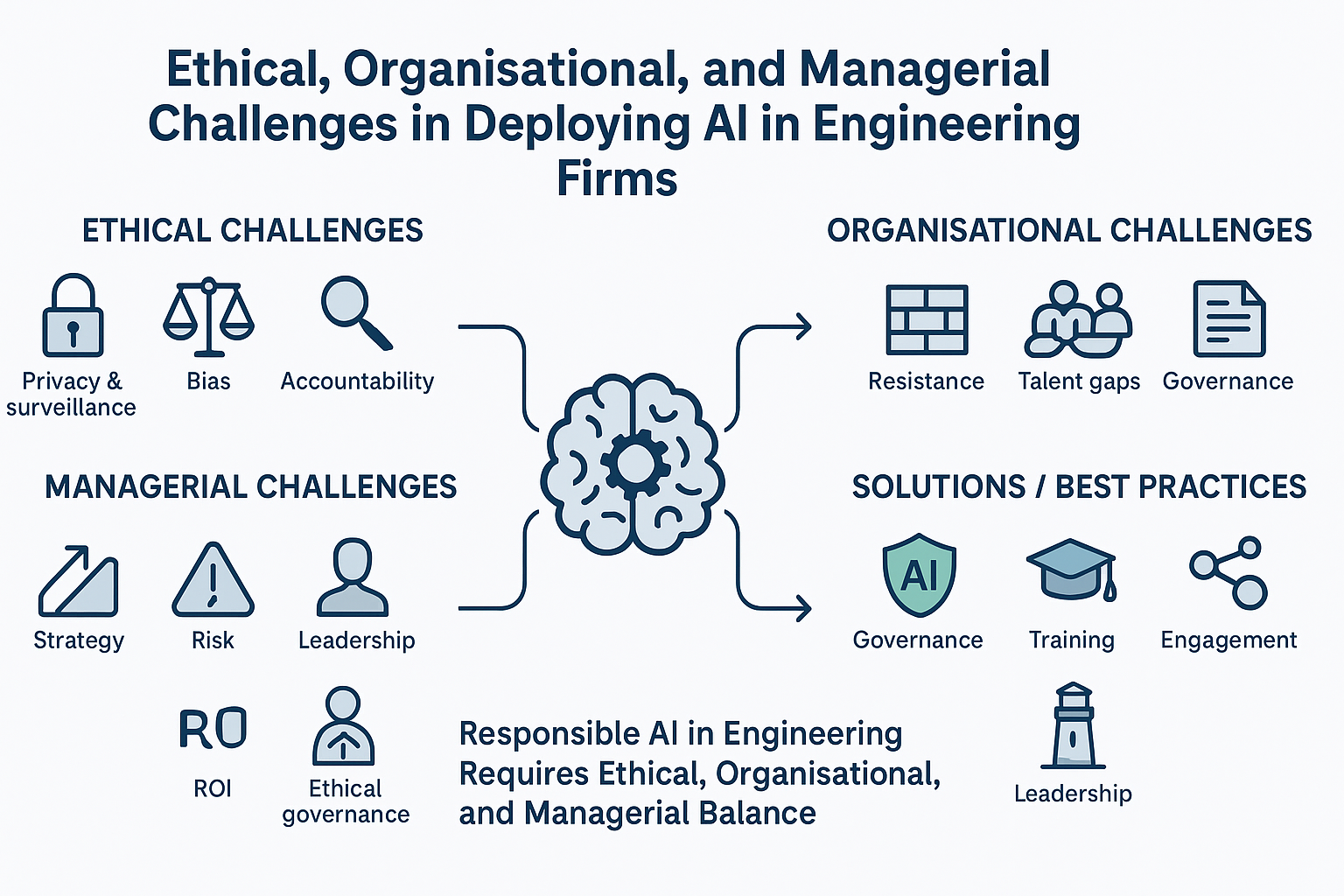
The adoption of Artificial Intelligence (AI) in engineering firms offers significant opportunities for operational efficiency, innovation, and strategic competitiveness. However, its implementation also presents a range of complex challenges that extend beyond technical integration. This review explores the multifaceted paradigms influencing AI adoption within engineering contexts, particularly at ethical, organisational, and managerial levels by adopting a narrative methodology, synthesising academic sources published between 2020 and 2025 to provide a multidisciplinary perspective. Technologically, key ethical concerns include algorithmic bias, data privacy, explainability, and accountability, especially in safety and critical applications. Organisationally, firms often encounter barriers such as legacy systems, fragmented data infrastructures, and cultural resistance to change. From a managerial perspective, the integration of AI demands workforce upskilling, cross-functional collaboration, leadership readiness, and strategic alignment, capabilities that many engineering organisations currently lack. Drawing on comparative insights across industries, this paper identifies common pitfalls such as fragmented AI implementation, organisational resistance, and weak governance structures. Success factors include clear strategic alignment, cross-disciplinary collaboration, and ethical leadership. To address identified challenges, the paper recommends the implementation of ethical AI governance frameworks and the development of targeted workforce reskilling programmes. Ultimately, the responsible deployment of AI in engineering requires a multidimensional approach that balances technological advancement with ethical integrity and stakeholder inclusivity.